 MLYN
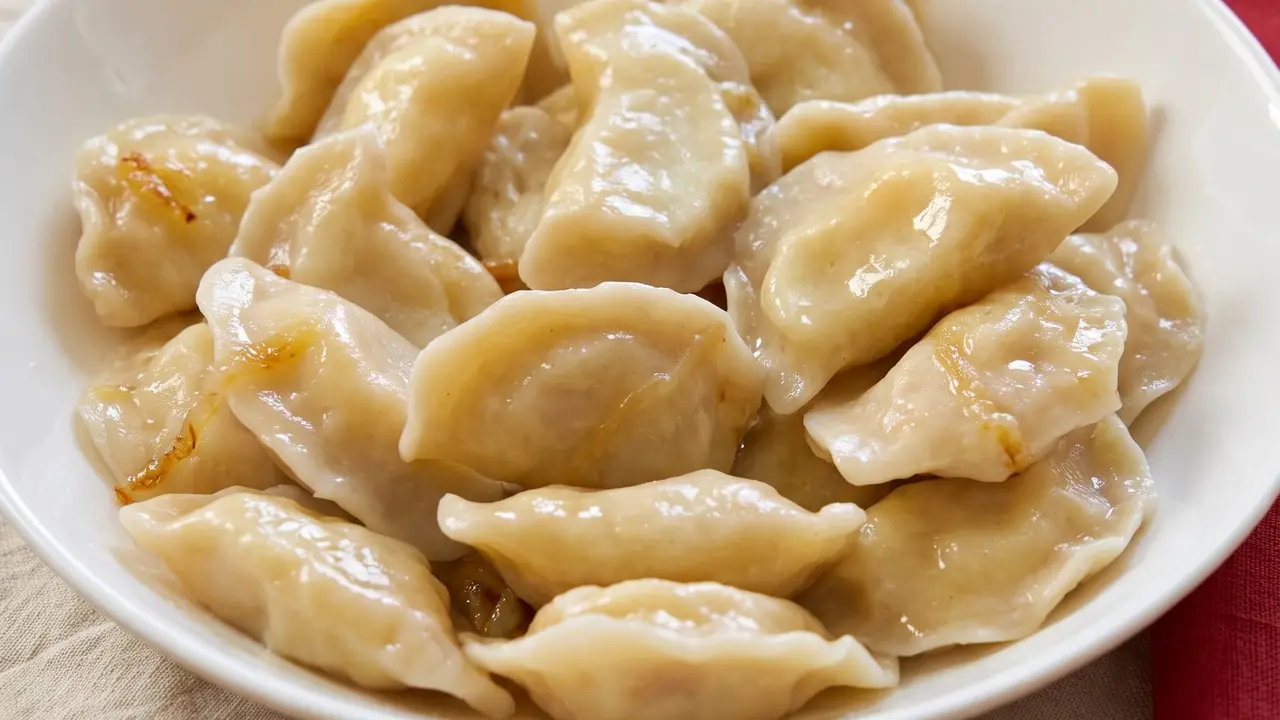
Short answer: pelmeni are small, round dumplings filled with raw minced meat. Vareniki (also written varenyky) are larger half-moons filled with something already cooked, savoury or sweet. Pierogi are the Polish name for almost the same thing as vareniki. All three are boiled, and all three are the food people from Ukraine, Poland and the rest of Eastern Europe miss most when they move abroad.
We make pelmeni and vareniki every week in our family kitchen near Lisbon, so here is the difference as we see it on the kitchen table.
Pelmeni: small, round, meat inside
Pelmeni are the size of a large coin. A thin circle of dough is folded over a spoon of raw minced meat, and the two corners are pinched together, which gives the little round “ear” shape. The meat cooks inside the dough in the pot, so the juice stays in.
The classic filling is pork, beef or a mix of the two. Ours come in six fillings: pork, beef, mix, chicken, salmon and tuna. We call them bogatyrski because they are bigger and fuller than the factory ones you find in a bag.
Pelmeni are eaten hot, often with a spoon of sour cream, butter, or a little vinegar and black pepper. Some families serve them in their own broth.
Vareniki: half-moons, savoury or sweet
Vareniki are the Ukrainian dumpling. The dough is softer and a bit thicker, the shape is a half-moon with a crimped edge, and the filling is cooked before it goes in. That is what makes sweet vareniki possible.
Our five fillings:
- potato, the everyday favourite, served with fried onion and sour cream;
- cabbage, braised until soft;
- tvorog (fresh curd cheese), mild and slightly sweet;
- cherry, sharp and juicy;
- blueberry, for berry lovers.
Sweet vareniki are eaten with sour cream and a little sugar, as a dessert or as a whole lunch, depending on who you ask.
Pierogi: the Polish cousin
Pierogi are what Poland calls the same half-moon dumpling. The best known are pierogi ruskie, with potato and curd cheese. The main habit that differs: in Poland, boiled pierogi are often fried in butter with onion until golden. You can do exactly that with leftover vareniki, and many Ukrainian families do too.
So if you grew up with pierogi, vareniki will taste like home. We do not sell anything under the name pierogi, but our potato and tvorog vareniki are the closest thing.
The quick comparison
| Pelmeni | Vareniki | Pierogi | |
|---|---|---|---|
| Where from | Russia, Ukraine and the region | Ukraine | Poland |
| Shape | small and round | half-moon | half-moon |
| Filling | raw minced meat or fish | cooked: potato, cabbage, tvorog, fruit | cooked: potato and cheese, meat, cabbage, fruit |
| Sweet versions | no | yes | yes |
| Usually served | boiled, with sour cream or butter | boiled, with sour cream or onion | boiled, often then fried |
How to cook them at home
Ours leave the kitchen frozen, and they go into the pot frozen. Thawed dough sticks and tears.
- Bring plenty of salted water to the boil, about 3 to 4 litres per kilo.
- Tip them in and stir once, gently, so they do not stick to the bottom.
- Count the time from the moment they float, not from the moment they went in: 7 minutes for meat pelmeni, 5 for salmon or tuna, 4 for vareniki.
- Sweet vareniki like a calmer pot: keep the water barely trembling, 4 minutes after they float.
Every savoury order comes with a printed cooking guide that says the same.
Where to buy them in Portugal
In Portuguese supermarkets you will find frozen “dumplings” from Asia and, now and then, a bag of factory pelmeni. Handmade ones are harder to find. We make pelmeni and vareniki by hand, only after you order, and deliver them around Lisbon every Saturday, including Mafra and Ericeira. Pickup from the kitchen is free, and delivery is free on orders over 60€.
Order on the menu page by Wednesday 20:00 for that Saturday. We need at least three days, because nothing is made ahead.
 Serving suggestion